Incident sheet · SIG-8286 · /infrastructure
- Signal
- SIG-8286
- Filed
- Read
- 4 min · 769 words
- Severity
- Routine
Air Force Turns Tanker Comms Experiment Into $180M Program of Record
The Air Force's MAF NEXUS program of record will equip tankers and airlifters with beyond-line-of-sight connectivity from fiscal 2028, with $180M earmarked for 222 ATOMS kits through 2031.
Event log
- MAF NEXUS becomes a program of record with earmarked funding in fiscal 2028
- 31 KC-46s already carry ATOMS Lite kits; $180 million is planned for 222 ATOMS kits through 2031
- AMC compressed development and testing into six months, per Gen. Wilsbach
- $91 million proposed for fiscal 2027 funds up to 103 KC-135 RTIC 2.0 kits
- Pentagon funding is frozen at fiscal 2026 levels of roughly $858 billion, about 40 percent below the 2027 request
The U.S. Air Force will fund fleet-wide connectivity upgrades for every tanker and airlifter under an official program of record starting in fiscal 2028, backed by roughly $180 million for 222 ATOMS kits through 2031.
Air Mobility Command's prototyping effort, MAF NEXUS, becomes a program of record in the next budget cycle, officials announced at the Airlift/Tanker Association symposium in Kissimmee, Fla. The decision converts years of experiments into earmarked procurement.
The urgency behind the move traces to March, when a KC-135 Stratotanker crashed in western Iraq during combat operations against Iran, apparently colliding with another KC-135 and killing all six crew members. The investigation continues, and officials have said only that hostile or friendly fire played no part. Former mobility leaders argue the accident underscores the fleet's lack of connectivity and battlespace awareness.
The takeaway: a known communications gap in the mobility fleet moved from the modernization backburner to funded priority after a fatal accident drew attention to it.
What is ATOMS and how does it work?
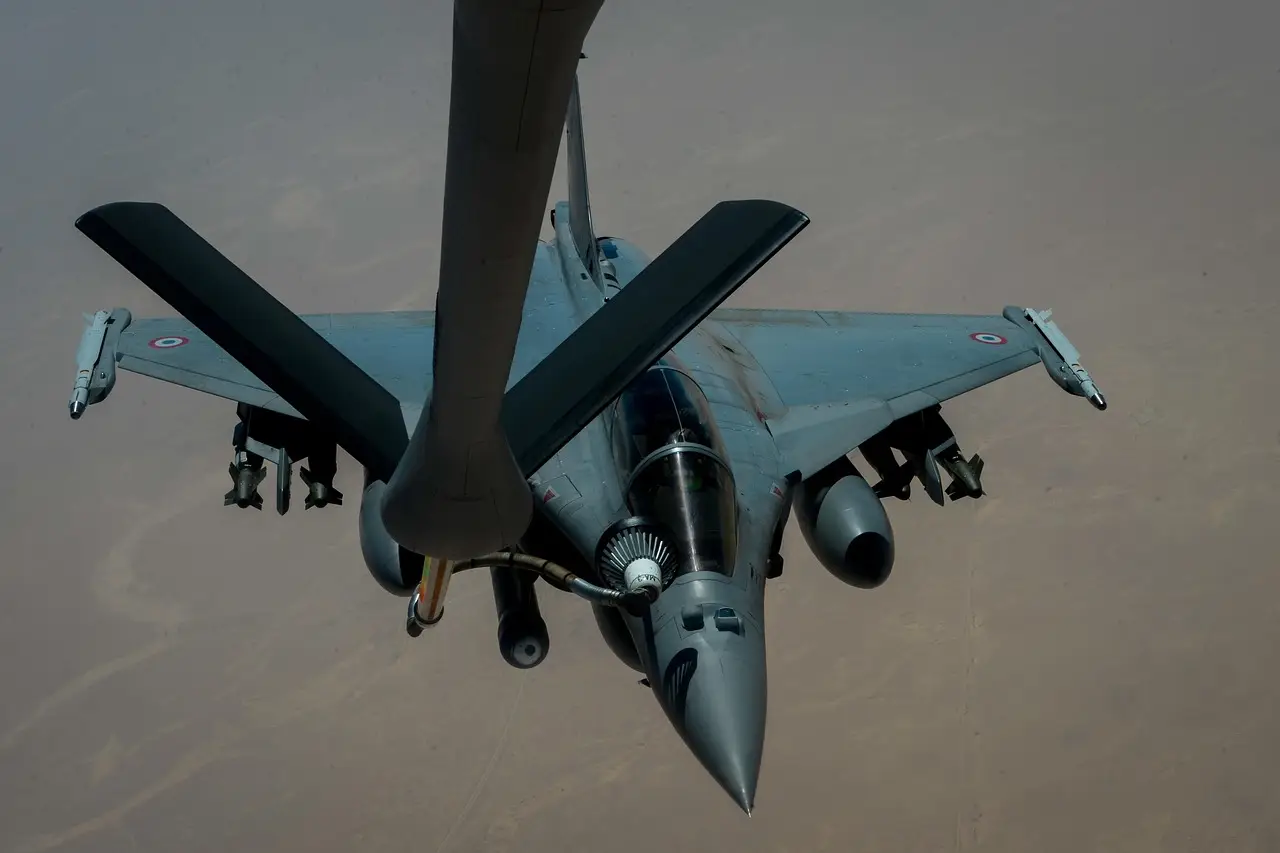
AMC launched its connectivity experiment in 2023. The result is Sierra Nevada Corporation's Airlift Tanker Open Mission Systems, or ATOMS, which connects multiple communications paths and sensors into a common operating picture for aircrews flying KC-46 Pegasus and KC-135 Stratotanker refuelers plus C-17 Globemaster and C-130 Hercules airlifters.
Through live testing in multiple exercises, including Mobility Guardian 2025 in the Pacific, SNC shrank ATOMS to a backpack-sized configuration. Aircrews carry touchscreen tablets onto the aircraft and connect to classified and unclassified internet through them. Tankers equipped with ATOMS have already flown operational deployments.
"Imagine landing with more situational awareness than you had at takeoff," Air Force Chief of Staff Gen. Kenneth S. Wilsbach said Nov. 6. "Aircrews tell us the value here cannot be overstated, particularly for dynamic taskings and distributed command and control requirements."
How fast has fielding moved?
Fast by Pentagon standards. Wilsbach said AMC "took a concept and development to a combat-tested capability, compressing years of traditional development and testing into just six months." Dozens of aircraft are connected now, with more coming.
The numbers by platform, according to Col. Paul Tucker, director of AMC's Commander's Initiative Group:
- KC-46: 31 aircraft equipped with ATOMS Lite kits, with funding found for 35 total after Secretary of the Air Force Troy E. Meink directed AMC to "put as many on as we can afford right now."
- C-17: 14 aircraft under contract, with kits prepared for roughly 26 more. The fiscal 2027 request includes $3 million for 12 C-17 kits — a down payment on an anticipated $180 million for 222 ATOMS kits through 2031.
- KC-135: the program office is folding ATOMS architecture into the Real Time Information in the Cockpit 2.0 upgrade; $91 million proposed for fiscal 2027 would fund up to 103 RTIC 2.0 kits, with another $102 million anticipated through 2031.
- C-130: a single ATOMS prototype so far.
In plain terms, the fleet-wide kit bill adds up to several hundred million dollars spread across five budget years.
What comes next for MAF NEXUS?
The program's goal is beyond-line-of-sight connectivity across the entire mobility fleet via a modular, open architecture that lets multiple vendors supply software and hardware upgrades, with scalable components that modernize without a platform redesign.
AMC plans to scale starting in fiscal 2028, though Tucker cautioned: "I don't know how fast; it's anybody's guess right now." A final field test of a near-production software baseline is set for Emerald Flag 2026 at Eglin Air Force Base, Fla., in December. Once that stabilizes, AMC will publish the MAF NEXUS baseline software, and ATOMS will keep evolving from there.
A parallel effort continues on the KC-46: the Air Force seeks about $83 million in fiscal 2027 for the Pegasus Advanced Communications Suite, which upgrades the Tactical Data Link 16 uplink to a more modern Link 16 — the beyond-line-of-sight standard used by U.S. and NATO strike aircraft — with $504 million anticipated through 2031.
One obstacle remains. All fiscal 2027 requests are frozen while Congress works through defense bills after the midterm elections, with Pentagon funding held at fiscal 2026 base levels of roughly $858 billion — about 40 percent below the 2027 request.
"We need the ability to upgrade our systems with software, not at the depot," Wilsbach said. "We need pipelines that can close a vulnerability or add capabilities in hours, not months."
The direction is set; the speed now depends on Congress.
via airandspaceforces.com (Source)
More from Amara Osei
Show full bio
Correspondent covering regulation, policy and their impact on enterprise information technology and the leaders who run at CIO Monitor.
127 articles
The newsroom digest
One email a day with the stories that matter. No noise.
Cross-references
- USAF Wants One Software Integrator for KC-46 Fleet by Dec. 11
- Air Force Special Warfare Seeks One Mobile Comms Kit for Every Vehicle
- Indian Air Force Deploys In-House AI Suite on Secure Network
- Air Force Launches Super Intelligence Strategy Across 15 Areas
- Cisco's open source chief: agent sandboxes alone won't stop AI attacks