Incident sheet · SIG-9170 · /security
- Signal
- SIG-9170
- System
- SEC · Security & Risk
- Filed
- Read
- 3 min · 609 words
- Severity
- Routine
D-Link confirms unpatched DGS-3130-30TS switch zero-days
D-Link confirms multiple unpatched zero-days in DGS-3130-30TS stackable switches. Until firmware arrives, administrators must disable DDP, tighten management access and monitor for resets.
Event log
- DGS-3130-30TS: multiple firmware versions are affected by unpatched DDP and firmware-architecture flaws.
- Three named flaw areas: DDP authentication, access control and information handling.
- Potential DGS-3130-30TS impact includes sensitive data exposure, unauthorized administrative changes, SNMP community leakage, service disruption and device resets.
- CVE-2026-86296: a separate September maximum-severity DIR-822A router zero-day had a public PoC and no patch.
- Five interim controls include disabling DDP, isolating management access, backing up configurations and monitoring logs.
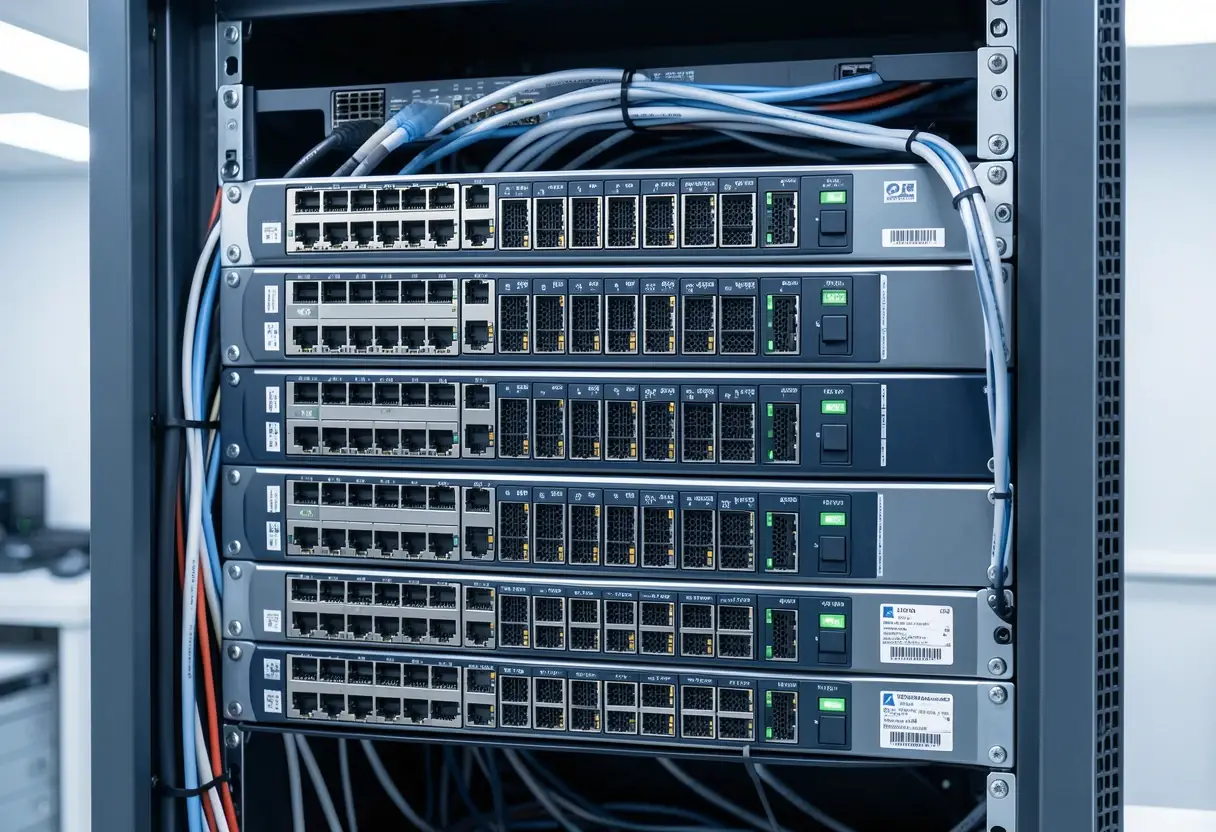
D-Link has confirmed multiple unpatched zero-days in DGS-3130-30TS managed Gigabit stackable switches, with no public CVE identifiers or replacement firmware for the affected flaws yet. The disclosed flaws sit in D-Link Discovery Protocol authentication, access control and information handling.
Giresh Kumar Enugu, a network engineer at Spectrum Community Solutions, found them. A tidy response would be a CVE list and a firmware download. D-Link has shared no technical detail and has yet to publish CVE IDs.
The company says multiple firmware versions are affected but does not name them in the advisory. That leaves administrators without a clean patch-to-advisory map, which is not an ideal way to start remediation.
The DGS-3130-30TS belongs to a managed Gigabit stackable line providing multi-gigabit uplinks that eliminate data bottlenecks. D-Link designed the series mainly for small and medium businesses and metro Ethernet deployments. The disclosed consequences extend beyond information disclosure to configuration integrity and network availability.
Successful exploitation could expose sensitive device data, enable unauthorized credential or configuration changes, leak SNMP communities, disrupt services or reset devices. D-Link put the scope plainly: “The reported vulnerabilities involve the D-Link Discovery Protocol (DDP) and certain components of the device’s firmware security architecture.”
The company also cited the security researcher: successful exploitation by an attacker with access to the affected network could expose device information, enable unauthorized administration, change device configuration or disrupt services. The advisory limits its scenario to an attacker with network access.
D-Link is still investigating whether other D-Link switching platforms share the flaws. Its review reaches beyond DDP into SSH service security configuration, safeguards for operating-system credentials, firmware encryption and embedded cryptographic keys. D-Link has not declared those other platforms or mechanisms affected; the disclosed impact currently covers multiple firmware versions of the DGS-3130-30TS.
Interim controls
Until D-Link releases new firmware, administrators should apply five controls. These are interim measures, not a substitute for replacement firmware.
- Disable DDP on affected switches until new firmware addresses the flaws. This removes the primary known attack vector.
- Remove unnecessary or default SNMP community strings.
- Restrict SSH, web UI and SNMP access to isolated management networks and designated admin hosts.
- Keep offline backups of switch configurations.
- Track device logs for unexpected configuration changes, unprompted reboots and factory resets.
What does this change for DGS-3130 administrators?
It changes the immediate job from patch management to exposure reduction. D-Link named DDP as the primary known attack vector and supplied no fix, so disabling it takes priority. Restricting management access shrinks the reachable surface; removing default SNMP community strings removes credentials D-Link does not want left in place.
Offline backups protect recovery, while log review can reveal unauthorized changes or resets. These measures contain the routes D-Link can identify now. None replaces the pending firmware update, and the advisory offers no comfort beyond that.
A separate router warning
D-Link warned customers in September about CVE-2026-86296, a maximum-severity zero-day in legacy DIR-822A dual-band Wi-Fi routers. The router flaw had a public proof-of-concept exploit and no patch. The two disclosures should not be merged: CVE-2026-86296 belongs to DIR-822A, while the switch flaws remain tied to DGS-3130-30TS and undisclosed CVE IDs.
Enterprise teams should inventory deployed DGS-3130-30TS models and firmware, apply the mitigations now and watch for the configuration changes, reboots or resets D-Link listed. D-Link still needs to supply CVE identifiers and replacement firmware. Until then, the advisory supports containment, not a clean bill of health.
via bleepingcomputer.com (Source)
More from Tom Whitfield
Show full bio
Market editor covering people, launches and day-to-day practice in enterprise information technology and the leaders who run at CIO Monitor.
121 articles
The newsroom digest
One email a day with the stories that matter. No noise.
Cross-references
- Atlassian's CVE-2026-21589 Hits Eight Data Center Products at 9.3 Severity
- Microsoft's October Patch Tuesday Ships 1,408 CVEs, One Actively Exploited
- DXN lands $4.8 million modular cable landing station order
- N-able ships hotfix for seven N-central zero-days after full disclosure
- QNAP urges Plex update after NAS compromise reports