Incident sheet · SIG-4035 · /security
- Signal
- SIG-4035
- System
- SEC · Security & Risk
- Filed
- Read
- 4 min · 747 words
- Severity
- Routine
DHS Predicts Midterm Shift Won’t Alter Counter-Drone Push
DHS will keep its counter-drone strategy after the midterms, but a $40,000 one-way drone, FBI training constraints and five-agency coordination expose unresolved risks for federal buyers.
Event log
- $40,000 production price for a one-way DHS attack drone built for a single use.
- Five departments signed a Monday memorandum outlining a unified federal test-and-deployment process.
- Democrats gained control of both the House and Senate after flipping multiple seats.
- The FBI says its counter-drone training center cannot keep pace with demand.
By Daniel Okafor
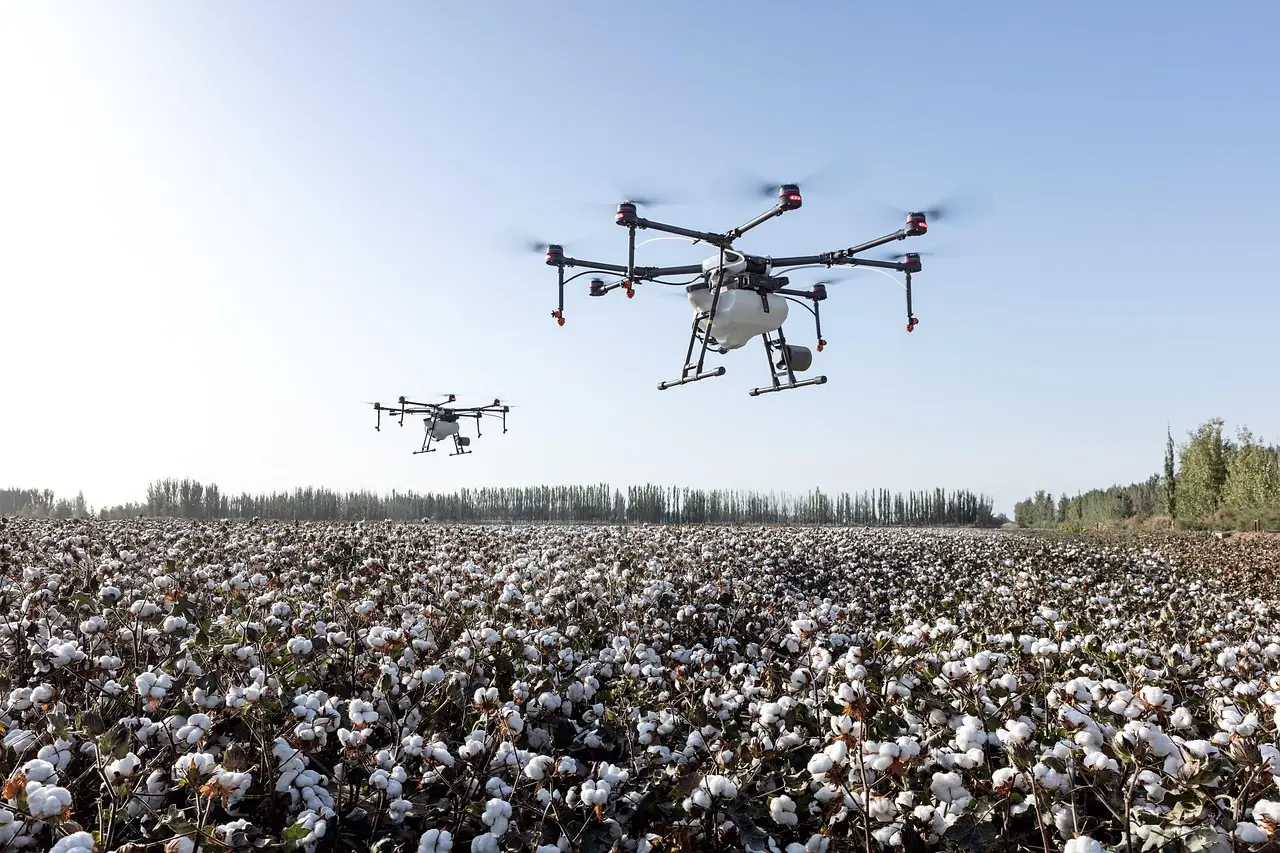
A DHS-used, one-way attack drone carries a $40,000 production price and is designed to crash into a target after one use, exposing the affordability gap in DHS’s counter-drone work.
DHS Secretary Markwayne Mullin said the congressional shift after the midterms will not deter that work. He expects no change in how the department engages the Hill on drone security.
Will Congress change the strategy?
Although Democrats gained control of both chambers and flipped multiple seats nationwide, Mullin said most members of relevant committees see the vulnerabilities and that he will not alter his congressional strategy.
The secretary made the prediction at the Commercial Drone Alliance’s Drone Security Industry and SLTT Grant Forum on Monday. He said relevant committees recognize the vulnerabilities even when political incentives drive public pandering.
He said some elected officials may act differently in private than in public. The source named no committees, pending votes or funding changes that could test his prediction.
Congressional action on drone security has had bipartisan support. Members have pursued three areas:
- Improving drone safety
- Creating partnerships with innovators
- Expanding drone-defense authority for state and local law enforcement
What does a $40,000 drone reveal?
The $40,000 production price applies to a craft designed to crash into one target, cannot return for reuse, and therefore converts every engagement into a fresh procurement decision.
Mullin called on industry to prioritize emerging capabilities and affordability. He said DHS cannot make its present system work unchanged. The department needs a complete rethink that remains economically feasible.
“If you think a $40,000 one-way attack drone that only has one use is going to be economically feasible … we’re kidding ourselves to think it is going to work,” Mullin said.
The criticism extends beyond acquisition price. Technology gaps compound the problem, Mullin said. Each mission repeats the $40,000 acquisition expense because the aircraft cannot return for another sortie.
The announcement named no manufacturer, model, production volume, procurement contract or delivery schedule. It also gave no comparison cost for a reusable system.
Can existing defenses handle drone swarms?
Because existing one-way options struggle against coordinated swarms, the FBI, Defense Department and technology companies must turn general partnership work into tested, repeatable defenses for attacks involving one or several operators.
One-way attack drones present a specific weakness against swarms, Mullin said. The Defense Department and technology companies have been working toward a possible solution, but unease remains.
“The FBI has absolutely thought about a swarm attack,” Devin Kowalski, assistant director of the FBI’s Critical Incident Response Group, said.
Kowalski said the FBI continuously works with partners on best practices, lessons learned and available technologies. Those efforts must fit law-enforcement authorities, which differ from the Defense Department’s, and address harm caused by one operator or several.
Operational strain is visible in two areas. DHS struggled with counter-drone measures in the period before the FIFA World Cup this summer, while the FBI says its counter-drone training center cannot keep pace with demand.
The source supplied no deployment count, training capacity or waiting time. Those omissions limit any assessment of DHS and FBI readiness against surge demand.
What did the five agencies agree?
Interagency coordination and communication have complicated drone-countermeasure work. Federal agencies have tried to ease the problem through data-sharing agreements and clearer paths for coordination.
On Monday, five departments signed a memorandum of understanding:
- Department of Defense
- Department of Transportation
- Department of Homeland Security
- Department of Energy
- Department of Justice
The memorandum outlines a unified federal process to test and deploy counter-drone technologies in the United States. It does not announce a field deployment or selected system.
According to the joint statement, the whole-of-government approach should strengthen collaboration, adapt to the latest drone threats, and protect aircraft operations and navigation equipment.
The five-agency memorandum outlines a unified federal route for testing and deployment, but its announcement provides no procurement budget, vendor selection, completion date, performance threshold or detailed civilian-safety protocol.
The civilian-safety language sets an outcome, but not a test standard, enforcement mechanism or responsible decision-maker. The memorandum also gives no cost ceiling or timetable.
The practical test now falls to procurement, testing and interagency execution. Mullin needs a cheaper answer to swarms, the FBI needs training capacity, and agencies need working coordination. Until those details become public, the midterm result changes less than the operating gaps.
via fedscoop.com (Source)
More from Daniel Okafor
Show full bio
Staff writer covering technology and product news in enterprise information technology and the leaders who run at CIO Monitor.
134 articles
The newsroom digest
One email a day with the stories that matter. No noise.
Cross-references
- Pentagon CIO Nominee Kirsten Davies Pitches 'Great Change' for DoD IT
- Army CID seeks darknet threat-intelligence software
- CISA Lost 1,000 Staff. Democrats Promise to Rebuild and Regulate
- Anthropic Security Chief Warns Cyberattacks Will Get Worse Before They Improve
- AI Squeezes the Window for Vulnerability Remediation