Incident sheet · SIG-6496 · /infrastructure
- Signal
- SIG-6496
- Filed
- Read
- 3 min · 599 words
- Severity
- Routine
Google's First AI Data Center in Space Is Now Operational
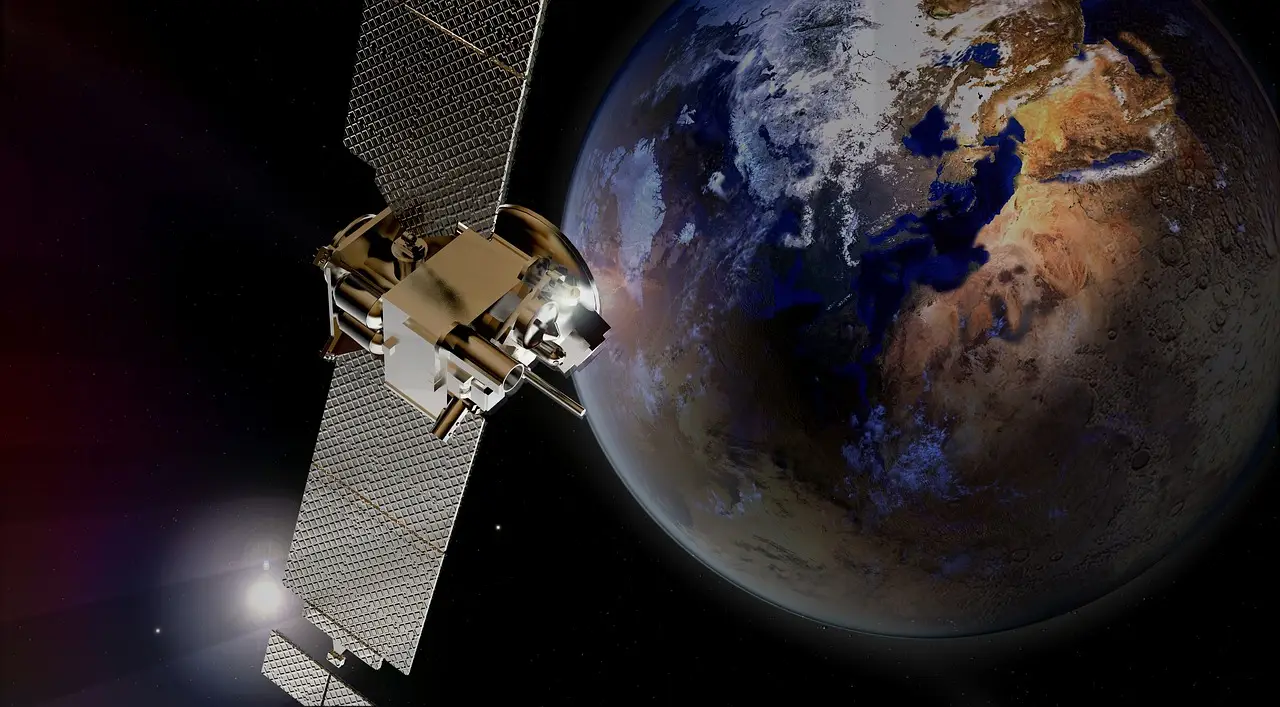
Google's first Suncatcher satellite is live in orbit with four TPUs on board, running Gemma 4 on one kilowatt of solar power after its October launch.
Event log
- Google's first Suncatcher data center satellite launched in October and is now communicating with Earth.
- The satellite carries four Tensor Processing Units and can generate up to one kilowatt of electricity.
- One kilowatt keeps an AI chip active for about 20 minutes, TechCrunch reports.
- The satellite ran Google DeepMind's Gemma 4 model, which wrote a haiku about life in space.
- Google plans to launch two more satellites in 2027 if temperature and radiation tests succeed.
Google's first experimental data center satellite is operational in orbit and has begun communicating with Earth. The satellite belongs to the Suncatcher project, Google's program for space-based AI compute. A launch in October placed the spacecraft in orbit, and several weeks of testing followed before the ground link went live. TechCrunch first reported the milestone.
The machine is small by data center standards. On board are four of Google's Tensor Processing Units (TPUs), the company's proprietary accelerator chips for running AI models. Power comes from the satellite's own solar generation. The craft can generate up to one kilowatt of electricity. That output is enough to keep one AI chip active for roughly 20 minutes, according to TechCrunch's reporting.
What Has the Satellite Done So Far?
The first workload was a proof of concept rather than a production task. Google ran Gemma 4, an AI model from Google DeepMind, on the orbital hardware. The model's assigned job: write a haiku about life in space. The satellite has also transmitted reports on conditions in its own orbit back to Earth, giving engineers live telemetry from the compute platform itself.
The test demonstrates the full chain Google needs to validate. That chain runs from on-board power generation, through inference on radiation-exposed silicon, to a working communications link with ground stations. Every element has now functioned at least once in flight.
What Comes Next for the Program?
Google's immediate priority is environmental hardening. The company will now test how the TPU hardware handles temperatures and radiation in space. Both factors stress commercial silicon in ways terrestrial data centers never face. Orbital temperature swings between sun and shade are extreme, and radiation can flip bits and degrade chip performance over time. The durability data from these trials will decide the program's pace.
The roadmap has a near-term milestone. If the tests go well, Google plans to launch two more satellites in 2027. That would triple the constellation and mark the shift from single-satellite experiment to coordinated infrastructure.
Why Put Compute in Orbit at All?
The long-term goal is a network of satellites capable of performing advanced AI computations. A distributed orbital cluster of this kind would function as a data center spread across space rather than confined to a terrestrial facility. Each satellite would contribute its own power generation and its own accelerator capacity to the shared pool.
For enterprise IT planners, the project signals a broader trajectory. Google is treating space as a viable location for AI infrastructure, not merely as a relay point for communications traffic. The Suncatcher test articles carry the same class of hardware, TPUs, that Google deploys in its ground-based AI supercomputers.
What Are the Constraints?
The current numbers define the gap between experiment and production. One kilowatt of generation supports approximately 20 minutes of active compute per chip cycle. Four TPUs sit on a single test satellite. Those figures position the program firmly at the research stage. Scale, power, and radiation tolerance remain the open questions that the 2026 testing campaign and the proposed 2027 launches are designed to answer.
For now, the program's first operational result is modest: a haiku, written in orbit, by a model running on Google silicon with no terrestrial power grid attached. The demonstration, not the poem, is the point. Google has shown that its AI chips can boot, run a model, and phone home from space, and the next two years of testing will determine whether the concept scales into a functioning orbital compute network.
via blog.google (Original)
More from Rebecca Stone
Show full bio
Senior reporter covering money, funding and market shifts around enterprise information technology and the leaders who run at CIO Monitor.
124 articles
The newsroom digest
One email a day with the stories that matter. No noise.
Cross-references
- Google splits eighth-generation TPUs for agents and confidential AI
- Google ships Gemini 4 Argon; intro pricing doubles after November 30
- Accenture and Google Cloud Field 1,000 Engineers for Enterprise AI
- Google's TPU 8tx and 8i Max expand enterprise AI hardware
- Google Ships Gemini 4 Hydrogen to All Search Users Globally