Incident sheet · /enterprise-ai
- System
- Enterprise AI
- Filed
- Read
- 4 min · 880 words
- Severity
- Routine
Knowledge Graphs Pay Off: Cosentino Counts $10M in Year-One Savings
Cosentino reports up to $10 million saved in year one of its semantic knowledge graph build and targets $100 million, as enterprises race to give AI agents business context.
Event log
- Cosentino saved up to $10 million in year one and targets $100 million in savings by year-end
- Blocked-order delays fell from an average of 22 days to a maximum of one day
- Knowledge graphs improved accuracy by 26%+ over chain-of-thought baselines (UC Santa Barbara / JP Morgan paper, late 2025)
- Cosentino's graph build started three years ago with Celonis engineers; agent build began last year
- Sales staff spend over a third of their time on administrative work slated for AI agents
Cosentino saved up to $10 million in the first year of its semantic knowledge graph project and expects to reach $100 million in savings by the end of this year. The Spanish manufacturing company started building its semantic layer three years ago and plans to finish the job within months.
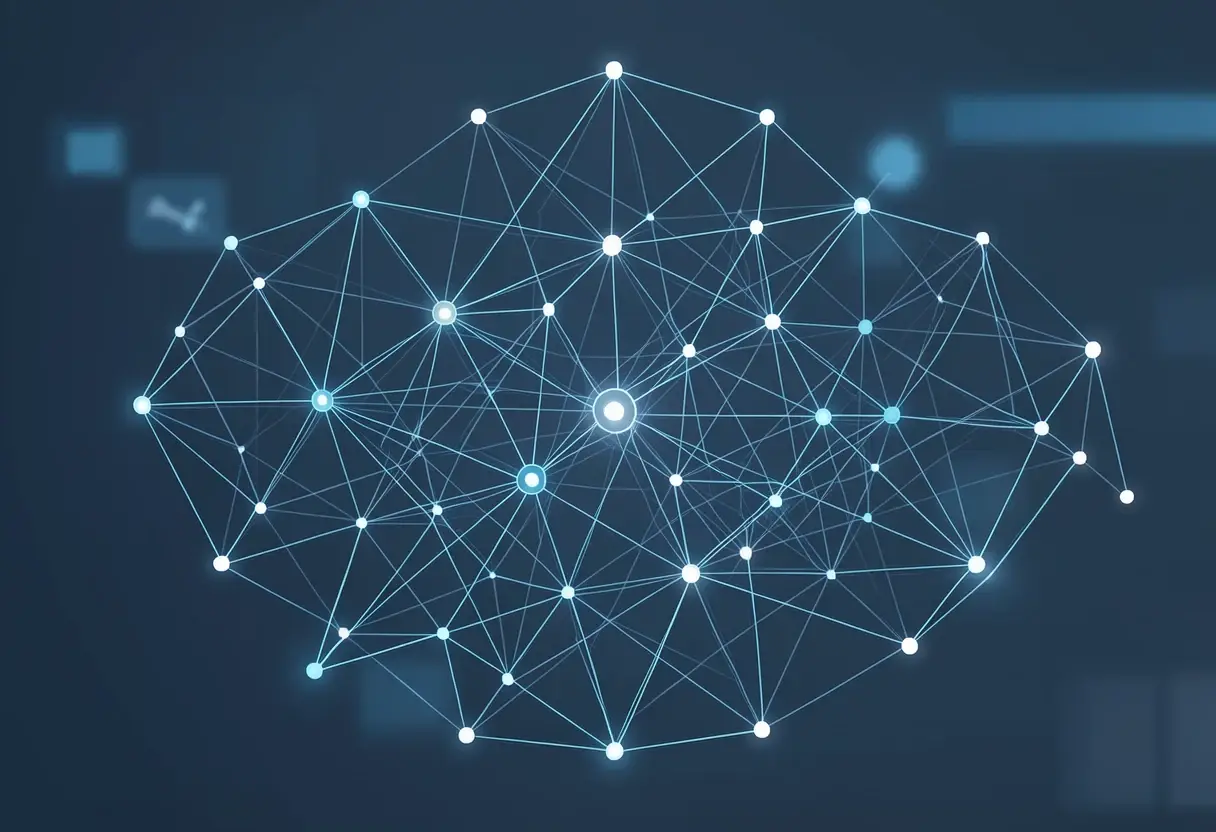
The lesson for CIOs is straightforward: agents cannot act on data they do not understand. A traditional database keeps names and companies in tables. A graph database stores the same facts as nodes and edges, so finding related entities means following a connection. A knowledge graph maps what those relationships mean. A semantic graph goes further and records what the data means for the enterprise — that a list of companies is a list of clients, that a list of people is a sales-call list, that a job title signals influence.
What does this change for agentic AI?
"Agentic AI is AI that can do things, not just tell you things," says Rafael Domene, global CIO at Cosentino. "But you have to provide what AI needs to do the job in the right way. Not just data, but information."
Cosentino had already spent heavily on a data lake, a data lakehouse, ERP and CRM systems. "You can collect all the data, but that's not enough to explain what's going on," he says. "If a KPI goes red, you need to dive deep into the organization to understand what happened." That work traditionally fell to human experts who carried the company's context in their heads.
AI agents carry none of it. They understand neither how companies work in general nor how one company works in particular. The semantic layer supplies that missing context.
The delayed-order use case shows the return. Fifteen departments owned fifteen dashboards around a single order process, and problems surfaced at the last minute. Now an AI agent inspects any order for any customer and predicts whether it will arrive on time — and if not, where the holdup sits, whether in raw materials, the factory or logistics.
The sales team gains reaction time. "If the salesperson knows about the problem as soon as it happens, they can go back to the customer, explain what happened, and offer potential solutions," Domene says. A blocked order that once averaged 22 days of delay — after a customer exceeded a credit limit — now takes at most one day. The finance team that handled those blocks manually now works on higher-value tasks.
The remaining build covers finance, logistics, manufacturing, operations, customer service, sales, procurement and HR. Cosentino began building AI agents last year, is testing them this year, and expects full operation soon. Sales staff currently spend more than a third of their time on administrative work; agents will take some of that over. "Not all of that saved time is going to be turned into revenue," Domene says. "We'll see how much we get out of that, but we see massive potential."
Who builds the graph?
Cosentino ran the project manually at first, pairing its own experts with engineers from process-mining vendor Celonis. "Systems like SAP have fixed flows and context so it was relatively easy," Domene says. AI later augmented the human work.
Full automation remains a bad idea. "Humans don't always create documents in ways the AI can understand semantic relationships," says David Hoelzer, fellow at the SANS Institute and chief of operations at Enclave Forensics. An autonomous AI builder "may end up with relationships that don't make sense. You still need people and they need a very particular set of skills."
Knowledge graphs or vector databases?
A year ago, the standard route to feeding an LLM was RAG over vector databases. That still works for unstructured data, but it dumps excess and sometimes dated material into the prompt, inflating token costs — a real problem for agents that call LLMs repeatedly. Knowledge graphs let agents fetch the exact fact; the semantic layer tells them what to do with it.
Some shops run both. New York Life Group Benefits Solutions built its knowledge graph on the LangGraph agent framework from LangChain. "The knowledge graphs work for multi-agent orchestration and the vector database for gen AI RAG applications," says CIO Matt Marze. His graph starts with business data, signals and external sources such as broker-community information; the semantic layer adds relationships, shared product definitions, workflow and business priorities.
Analysts confirm the demand curve. "A year and a half ago, I was talking about it and people looked at me like I had three heads," says James Kaplan, distinguished partner at McKinsey & Company. "But in the past year, we've seen real uptick for knowledge graphs."
The accuracy argument is quantified. A paper released at the end of 2025 by researchers at UC Santa Barbara and JP Morgan AI Research found knowledge graphs improve accuracy by 26% or more over standard chain-of-thought baselines. "All the models are probabilistic ones," says Zakir Hussain, partner and EY Americas data and AI leader for industrials and energy. "As soon as you try to use any of those models to answer enterprise-level questions, they start hallucinating." His verdict: to unlock growth, efficiency and productivity, "you have to codify the context of the company."
via cio.com/feed/ (Source)
More from Tom Whitfield
Show full bio
Market editor covering people, launches and day-to-day practice in enterprise information technology and the leaders who run at CIO Monitor.
185 articles
The newsroom digest
One email a day with the stories that matter. No noise.