Incident sheet · /infrastructure
- System
- Infrastructure & Cloud
- Filed
- Read
- 4 min · 891 words
- Severity
- Routine
NPCI's MDR-funded scheme targets 6-10 million QR codes a year
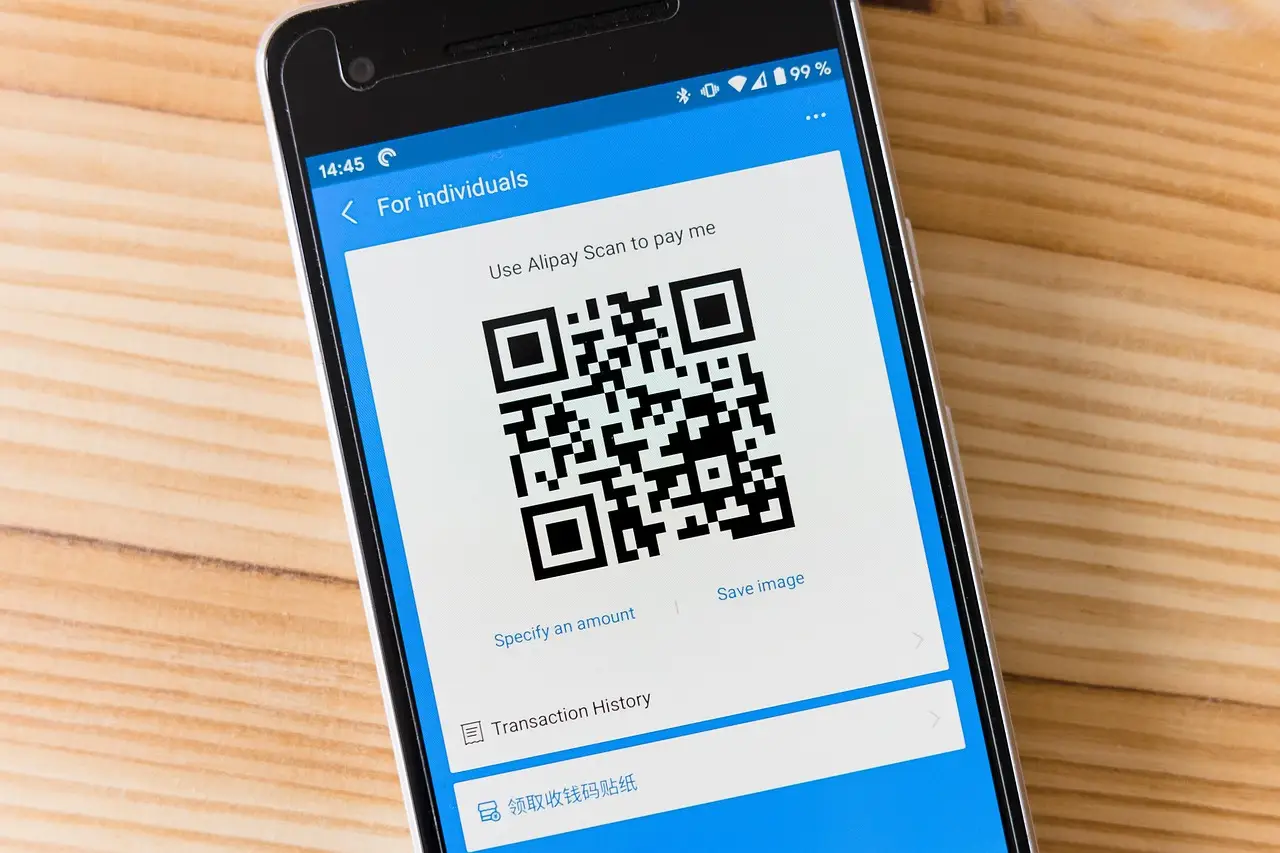
NPCI's UPI Vyapaar Saksham Scheme will fund 6-10 million QR codes and up to 1 million soundboxes annually using 5% of MDR from every ecosystem participant on transactions above Rs 2,000.
Event log
- NPCI circular dated November 11 launches the UPI Vyapaar Saksham Scheme, funded by 5% of MDR shares from issuing banks, acquiring banks, UPI apps and PSPs.
- Acquiring banks get Rs 300 per QR code and Rs 750 per soundbox; targets are 6-10 million QR codes and 0.5-1 million soundboxes annually.
- Scheme runs three years, targets merchants with turnover of Rs 40 lakh, and expects 30-50% annual transaction volume growth among existing small merchants.
- Paytm CFO Madhur Deora said UPI MDR could add roughly Rs 700 crore in EBITDA, reaching Rs 900 crore by FY28.
- The UPI MDR framework, deferred from October 15 until after Diwali, still has no announced rollout date.
India's payments authority has committed up to 100% of a new merchant-fee-funded pool to push UPI acceptance into small towns, with a target of 6-10 million new QR codes and 0.5-1 million soundbox devices deployed every year. The National Payments Corporation of India (NPCI) set out the plan in a circular dated November 11, naming it the UPI Vyapaar Saksham Scheme. Its arrival signals that the long-debated UPI merchant discount rate (MDR) framework may be close to activation, because the scheme draws its entire budget from that fee.
How will the scheme be funded?
The money comes from MDR levied on select person-to-merchant UPI transactions above Rs 2,000. Every participant in the payment chain — issuing banks, acquiring banks, UPI apps and payment service providers — will contribute 5% of their respective MDR shares. NPCI will collect these contributions monthly, based on the MDR earned in the preceding month. The scheme runs for three years from the date UPI MDR takes effect, with an impact analysis every six months and possible expansion to more regions and merchant categories. In plain terms: a slice of every fee the industry earns gets recycled into building acceptance infrastructure.
Who qualifies as a small merchant?
Eligibility hinges on scale and location. The scheme defines a small merchant as one with annual turnover of Rs 40 lakh in the previous financial year, split into two groups:
- New small merchants — onboarded onto UPI during the scheme period.
- Existing merchants — onboarded before the scheme began.
Priority geographies are Tier-3 to Tier-6 cities, northeastern states, Jammu and Kashmir, and Ladakh. Tier-1 and Tier-2 centres qualify only for merchants covered under notified central government schemes such as PM SVANidhi and PM Vishwakarma.
Where exactly does the money go?
The fund is split three ways, with the largest tranche tied to transaction growth.
1. New merchant onboarding — 30% of the fund. Acquiring banks receive Rs 300 for every QR code deployed and Rs 750 for every soundbox device. To qualify, a merchant must process at least 25 eligible transactions in any two months of a quarter and record a minimum monthly transaction value of Rs 5,000. Merchants that previously received incentives under this or any other subsidy scheme for the same infrastructure are excluded.
2. Transaction growth — 50% of the fund. Acquiring banks earn 0.03% of the aggregate value of eligible transactions, provided they sustain at least 5% quarter-on-quarter transaction volume growth among eligible small merchants. Merchants in targeted geographies carry an additional 50% incentive on top of the base amount.
3. Incremental growth in target regions — 20% of the fund. Banks receive 0.20% of the incremental aggregate transaction value, layered over the 0.03% incentive from component two.
NPCI expects the scheme to lift transaction volumes among existing small merchants by 30-50% annually.
Why did NPCI act now?
The backdrop is a financing gap. The central government mandated zero MDR on UPI transactions from January 2020 to drive adoption and cut digital transaction costs. In March this year, a Parliamentary Standing Committee on Finance warned that the absence of MDR had made the UPI ecosystem "financially unsustainable." Government subsidies under the zero-MDR policy routinely fell short of industry processing costs. "Incentive support constitutes only 11% of the cost incurred by the industry and 14% of the potential MDR collected by the industry," the Department of Financial Services told the committee. The MDR framework was scheduled to take effect on October 15 but was deferred until after Diwali; no new rollout date has been announced.
Scale is not the problem — distribution is. UPI processed roughly 166 billion transactions in the seven months through April 2026, yet acceptance infrastructure remains concentrated in Tier-1 and Tier-2 cities, according to NPCI's own circular.
What does this mean for payment companies?
The scheme opens a recurring revenue stream that could push banks and fintechs to onboard more small merchants. Paytm expects UPI MDR to improve its payments processing margin by at least 2.5 basis points. "On our GMV, which is Rs 28 lakh crore at current scale, 2.5 bps would give you something slightly more than Rs 700 crore. So, your ballpark of Rs 900 crore by FY28 is correct," said Madhur Deora, CFO of Paytm, on the company's Q2 FY27 earnings call. Pine Labs CEO Amrish Rau agreed with an analyst's estimate that UPI MDR could unlock annual revenue of Rs 80-230 crore; the company plans to deploy 10 lakh soundbox devices across India. Rau argues merchants cannot absorb both monthly PoS subscription fees and 0.4% MDR on transactions above Rs 2,000.
Opposition remains. Investment firms including Zerodha, CapitalMind and Groww have spoken out against the mandatory fee. "Rs 300 is not affordable either for us or for the customer because a lot of time customer doesn't actually transact," said Ishan Bansal, co-founder and CFO of Groww, on the company's Q2 FY27 call. Petrol pump dealers, retailers and customers fear merchants will pass the cost on through higher charges.
The bet NPCI is making is simple: tax the top of the network to fund the bottom, and price the friction of onboarding a small-town merchant at Rs 300 a QR code.
via medianama.com (Source)
More from Amara Osei
Show full bio
Correspondent covering regulation, policy and their impact on enterprise information technology and the leaders who run at CIO Monitor.
188 articles
The newsroom digest
One email a day with the stories that matter. No noise.
Cross-references
- UPI MDR to Unlock Rs 80-230 Crore Annual Revenue for Pine Labs
- RBI Consolidates Cyber Rules for Payment Operators Into One Master Direction
- Odisha commits ₹393.62 crore to campus Wi-Fi across 601 colleges
- Microsoft Cloud Prices Rise Up to 20% in India and New Zealand
- 20.48 Lakh Defence Pensioners File Digital Life Certificates