Incident sheet · SIG-8532 · /security
- Signal
- SIG-8532
- System
- SEC · Security & Risk
- Filed
- Read
- 4 min · 854 words
- Severity
- Routine
DHS Races to Close Drone Defense Gaps Before LA 2028 Olympics
DHS is pouring $1.5 billion into counter-drone defenses and untangling command-center data ahead of the 2028 Los Angeles Olympics, which will draw 15,000-plus athletes across all 50 states.
Event log
- DHS launched a $1.5 billion drone defense effort in August, with awards to Anduril, Booz Allen and GDIT
- Around $250 million in fiscal 2027 will fund state and local drone detection and mitigation
- DHS Secretary Markwayne Mullin flagged a $40,000 one-way attack drone as economically unworkable
- The 2028 Olympics will bring more than 15,000 athletes, with the torch relay spanning all 50 states
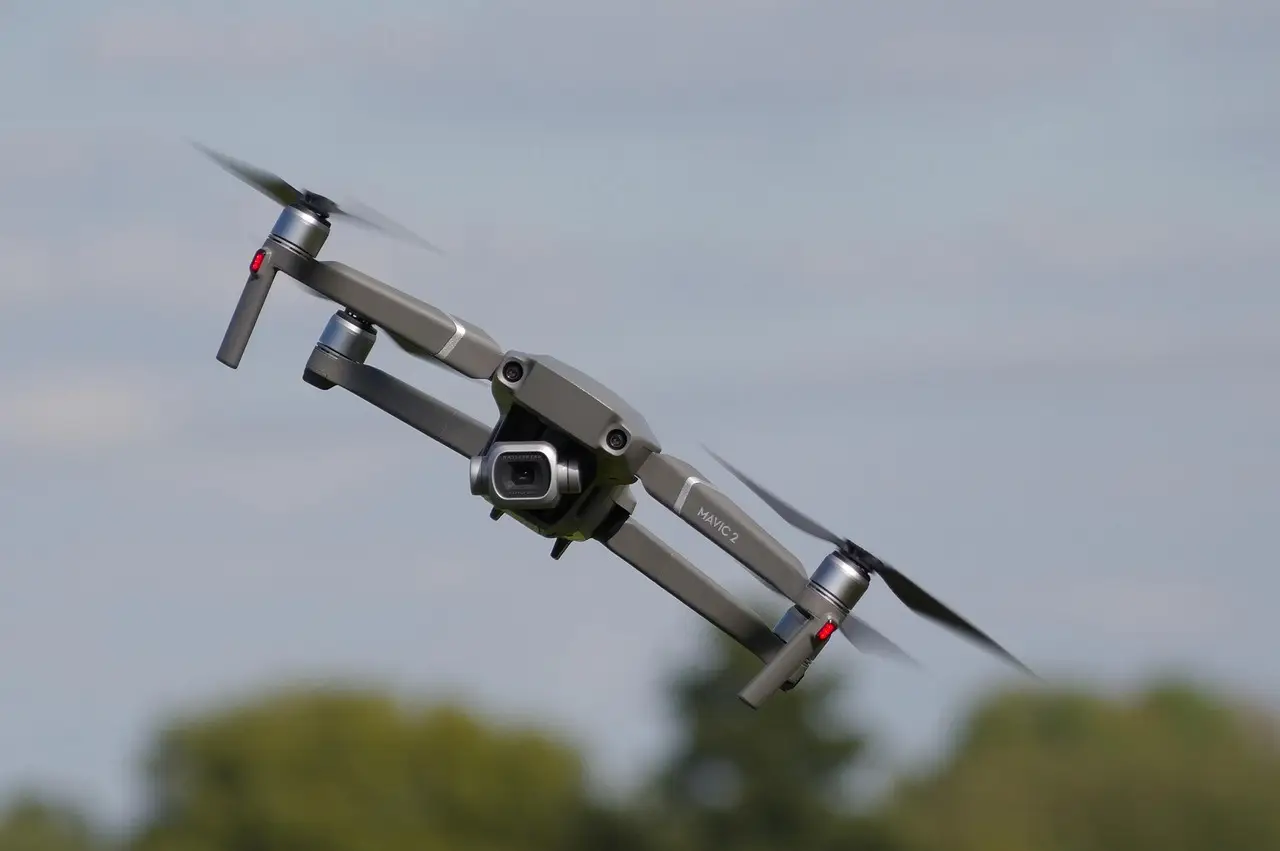
A $1.5 billion drone defense program, a $250 million grant pipeline and a four-year countdown: that's the scale of the technology buildup the Department of Homeland Security has underway as it gears up to secure the 2028 Olympics in Los Angeles.
The games will bring more than 15,000 athletes and countless fans. And while most events sit inside California, the torch relay will run through all 50 U.S. states — a security footprint no single agency can cover alone.
Planning began just after the FIFA World Cup wrapped, and officials arrived with a mountain of lessons learned. State and local partnerships, drone mitigation and command center hubs all proved their worth. But DHS isn't resting on its laurels.
"We're already all working together to make sure that LA '28 is secure," Amy Szestak, special agent in charge of the Secret Service's Office of Administration, said on a panel at a GDIT Emerge event Thursday. "The relationships are in place to have those conversations, whether it's resourcing or just, 'how would you do this,' or 'how would you handle this from a large event perspective?'"
Officials are also asking a harder question: who was missing from the table during the World Cup?
"We have to make sure that we have the plans in place and the communications in place so that we're able to talk to everybody," Szestak said. "That's one of the biggest lessons that we took away."
What happens when the skies and the ground get busy at once?
Some variables simply can't be controlled. FEMA is already war-gaming scenarios where Olympics resources collide with a hurricane or an earthquake.
"For us, it's making sure we're sharing information with everyone," said Kim Guymon-Lemoult, deputy regional planning branch chief within the FEMA Response Directorate. Her team is charting a plan for potential multi-regional resource adjudication. "It's getting all that codified beforehand, which is part of planning," she added.
Pre-scheduled events do carry advantages, though. "National security events actually, to me, are more manageable because they're short, you know they're coming and you have permission, critically, to do things and get specific waivers that would normally take a long time," Ryan Riccucci, senior advisor of law enforcement and technology integration at Customs and Border Protection, said at the Red Hat Government Symposium in October.
Where's the data problem?
Interoperability remains a stubborn gap. "We have two different words for the same thing, two different definitions for the same word across different organizations, missions, systems, vendors and data sets," Riccucci said.
A threat, a drone, a hostile, a credible threat or an item of interest — different systems may label one unmanned aircraft any of these. In a crowded command center, superfluous alerts cost critical time.
"When you send that to a system, I don't want 10 dots on the map about a singular drone," Riccucci said, recounting what he saw at FIFA: nine screens in a command center, one showing the same drone detected three times, another showing only a single vendor's view of whether it was three drones or one.
"Having the software and technology that can basically be the Google Translate for data, that's what really is missing," he said.
Is the counter-drone arsenal affordable?
DHS Secretary Markwayne Mullin, speaking at the Commercial Drone Alliance's Drone Security Industry and SLTT Grant Forum earlier this month, said the agency wants counter-UAS capabilities that are cheaper and better integrated with emerging tech.
He pointed to one attack drone DHS uses that carries a $40,000 production price tag. It's a one-way attack drone — designed to crash directly into a target. Not reusable, and badly limited against a drone swarm.
"If you think a $40,000 one-way attack drone that only has one use is going to be economically feasible … we're kidding ourselves to think it is going to work," Mullin said.
The funding machinery is already moving. DHS kicked off the $1.5 billion drone defense effort in August, with awards to Anduril, Booz Allen, GDIT and other major vendors. That follows the agency's creation of a dedicated UAS office and additional funding plans. Roughly $250 million — appropriated through the One Big Beautiful Bill Act — is scheduled to go out in fiscal 2027 to bolster drone detection and mitigation at state and local levels.
Still, questions linger as the award date nears. Asked how much money the highest level of drone security would require given the 2028 Olympics, DHS Under Secretary for Management Brian Cavanaugh was blunt: "It's hard to put a finger on the exact dollar amount."
"What you have to do is prioritize," Cavanaugh said at the CDA event. "It's really easy to get bogged down by how broad and how expansive it is. It's almost like a problem that's too daunting to tackle."
For state and local security teams, that prioritization — and the grants behind it — lands in fiscal 2027, a year out from the opening ceremony.
via fedscoop.com (Source)
More from Olivia Hart
Show full bio
News editor covering money, funding and market shifts around enterprise information technology and the leaders who run at CIO Monitor.
137 articles
The newsroom digest
One email a day with the stories that matter. No noise.