Incident sheet · /enterprise-ai
- System
- Enterprise AI
- Filed
- Read
- 3 min · 649 words
- Severity
- Routine
Energy Department bets on AI to harden the grid and military bases
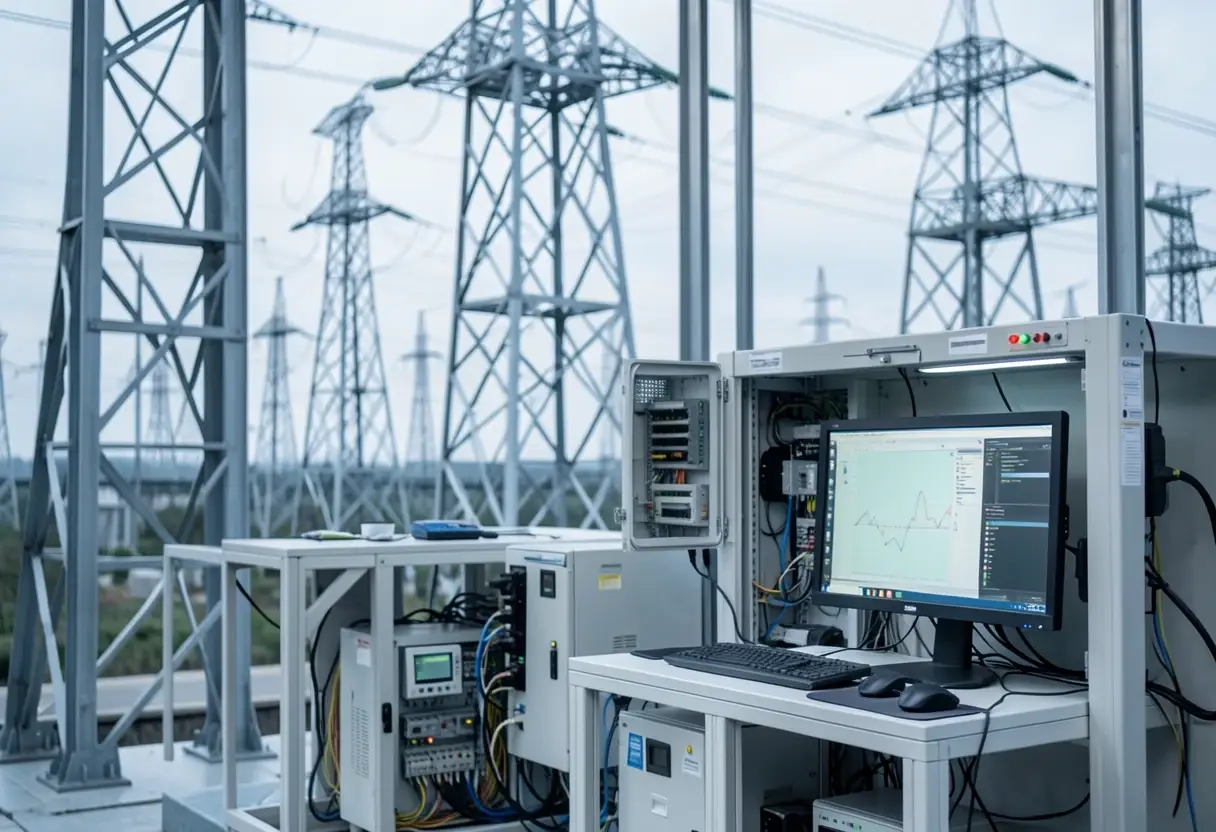
Energy Department officials say AI is now central to grid defense: Argonne's GridAI runs computations 4,000x faster, while Project Armor maps vulnerabilities at critical military installations.
Event log
- Argonne's GridAI runs computations 4,000 times faster than conventional utility solvers and covers 99% of outage risk via tens of billions of contingency calculations.
- CESER Director Andrew McClure said grid controllers, battery management systems and telecom devices in power transformers are inherently insecure.
- Project Armor, led by the Energy Department with DoD's Energy, Installations and Environment Office, maps vulnerabilities at critical military installations.
- Project Armor is part of DoD's broader Fortress initiative for military critical infrastructure and energy independence.
- AI has cut infrastructure assessment reporting to CESER from up to a year to near-real-time.
The Energy Department is deploying artificial intelligence across the grid and its military critical infrastructure, and its research labs claim one new foundation model runs power-system computations 4,000 times faster than the conventional solvers utilities use today.
That number came from Duane Rudolph Verner, Global Energy Security Department manager at Argonne National Laboratory, who briefed attendees at AFCEA Bethesda's Energy, Infrastructure and Environment Summit alongside Energy Department officials. The two-track push covers both operational defense — finding and fixing insecure grid hardware — and a new AI modeling platform called GridAI, trained on data from three national laboratory supercomputers.
What's insecure about the grid right now?
Andrew McClure, director of the Energy Department's Office of Cybersecurity, Energy Security and Emergency Response (CESER), didn't sugarcoat it. Many aspects of grid controllers are inherently insecure, he said, and the problem is baked into the hardware itself:
- Programmable logic controllers
- Battery management systems
- Telecommunication devices built into power transformers
The shift he wants is cultural as much as technical: moving from a defensive mindset to an offensive one.
"It's a challenge if we build inference models without defensive capabilities. After we train models, we're going to have increased insecurity across the grid," McClure said. "We need to do this right. We need to invest in the foundational research as well as the mature technologies that are commercially ready that utilities, our stakeholders, can benefit from."
In other words, AI deployed without built-in security could widen the attack surface rather than shrink it.
How does Project Armor protect military installations?
CESER is also securing defense critical infrastructure. A new partnership, Project Armor, is led by the Energy Department and works with the Defense Department's Energy, Installations and Environment Office to identify critical installations and map out potential vulnerabilities.
Project Armor sits inside DoD's broader Fortress initiative, which aims to secure military critical infrastructure and ensure energy independence.
McClure said conversations between CESER and the service branches are establishing a baseline for the energy supply that different installations and bases need. The questions driving that work are practical:
- Do installations need additional bulk fuel storage?
- Do they need resilient substations or hardened infrastructure feeding a base?
- How should the grid itself be modeled?
"Those are the kinds of scenarios that we think about and provide a boutique set of solutions for these military installations in support of the Fortress approach," McClure said.
What does GridAI actually change for operators?
Argonne researchers are training what Verner described as the first foundation AI model to understand the different systems that connect and power the grid. GridAI accounts for the changes power systems experience on a second-by-second basis, and could help utility companies and grid operators improve resiliency and preparedness during natural disasters or adversarial attacks.
The performance claims are striking. "With the grid foundation model, we're able to do computations 4,000 times faster than a traditional conventional solver being run at a utility; we're able to cover 200 times the outage risk aperture," Verner said.
He framed the mission simply: "The ultimate goal is to flatten that resilience curve … GridAI has shown that we can cover 99% of that overall risk aperture through tens of billions of contingency calculations."
Faster assessments, faster reports
National laboratory engineers and scientists are also using AI to deliver continuous situational awareness to other parts of the Energy Department, providing real-time grid information to CESER.
Verner drew the contrast with his own career. "Typically, we are sending out a team to do an assessment that takes and the report we write might take a year to get to CESER," he said. "Now with AI, it's easier to go out, do the assessment and write the report."
A year-long reporting lag, compressed. For grid operators and military installation planners, that speed is the story.
via federalnewsnetwork.com (Source)
More from Olivia Hart
Show full bio
News editor covering money, funding and market shifts around enterprise information technology and the leaders who run at CIO Monitor.
207 articles
The newsroom digest
One email a day with the stories that matter. No noise.
Cross-references
- OpenAI renames data centers 'compute campuses' and pledges grid relief
- Platform Teams Become the Control Point for Enterprise AI by 2027
- Before You Sign: The Traceability Demands Data Leaders Should Put on Vendors
- AI Workloads Are Pulling Government Systems Back From Public Cloud
- Nadella: Much of America's Critical Infrastructure Is 'Unpatchable'