Incident sheet · /infrastructure
- System
- Infrastructure & Cloud
- Filed
- Read
- 3 min · 643 words
- Severity
- Routine
Google Bets $500 Million on Quaise's Three-Mile-Deep Geothermal Wells
Google will pay over $500 million for 50 MW from Quaise Energy's super-hot rock geothermal project in Oregon, tapping heat three miles deep as startups race to prove drilling tech.
Event log
- Google committed more than $500 million for 50 MW from Quaise Energy's central Oregon geothermal project
- A single super-hot rock well could generate 15 MW or more; U.S. geothermal potential is estimated at up to 57 terawatts
- Quaise has raised over $270 million; Mazama Energy has raised $171 million from investors including Khosla Ventures and Bill Gates
- Mazama says its second well drilled 80% faster than its first, with CO2 cooling cutting drilling time another 20%
- The DOE granted XGS Energy funding last week for super-hot rock materials and well-design research
Google will pay more than $500 million for 50 megawatts of geothermal power from Quaise Energy's project in central Oregon. The deal, announced Tuesday, is the largest single commercial commitment yet to super-hot rock geothermal. It is also a premium price per megawatt, and neither company has disclosed the contract's duration.
The Oregon project will tap heat three miles underground. At those depths, water turns into a supercritical fluid — a gaseous-liquid state that carries far more energy than ordinary steam. One super-hot rock well could generate 15 megawatts or more. That is roughly three times the output of a conventional geothermal well, according to industry estimates cited in the announcement cycle.
Why are hyperscalers suddenly buying geothermal?
The U.S. holds up to 57 terawatts of potential geothermal generating capacity by some estimates. That figure dwarfs current U.S. demand, which runs near 4.6 terawatts of installed capacity across all sources. Enhanced geothermal went public-market earlier this year when Fervo Energy listed. Geothermal has drawn support from investors, tech companies and the Trump administration. Drilling techniques borrowed from oil and gas have driven most of the recent progress.
Google's payment exceeds the market rate for the power Quaise will deliver. The company acknowledged this. It fits Google's pattern of paying early for supply — it was both an investor in and early customer of Fervo. The premium is effectively an option on the technology working.
How do the rival approaches differ?
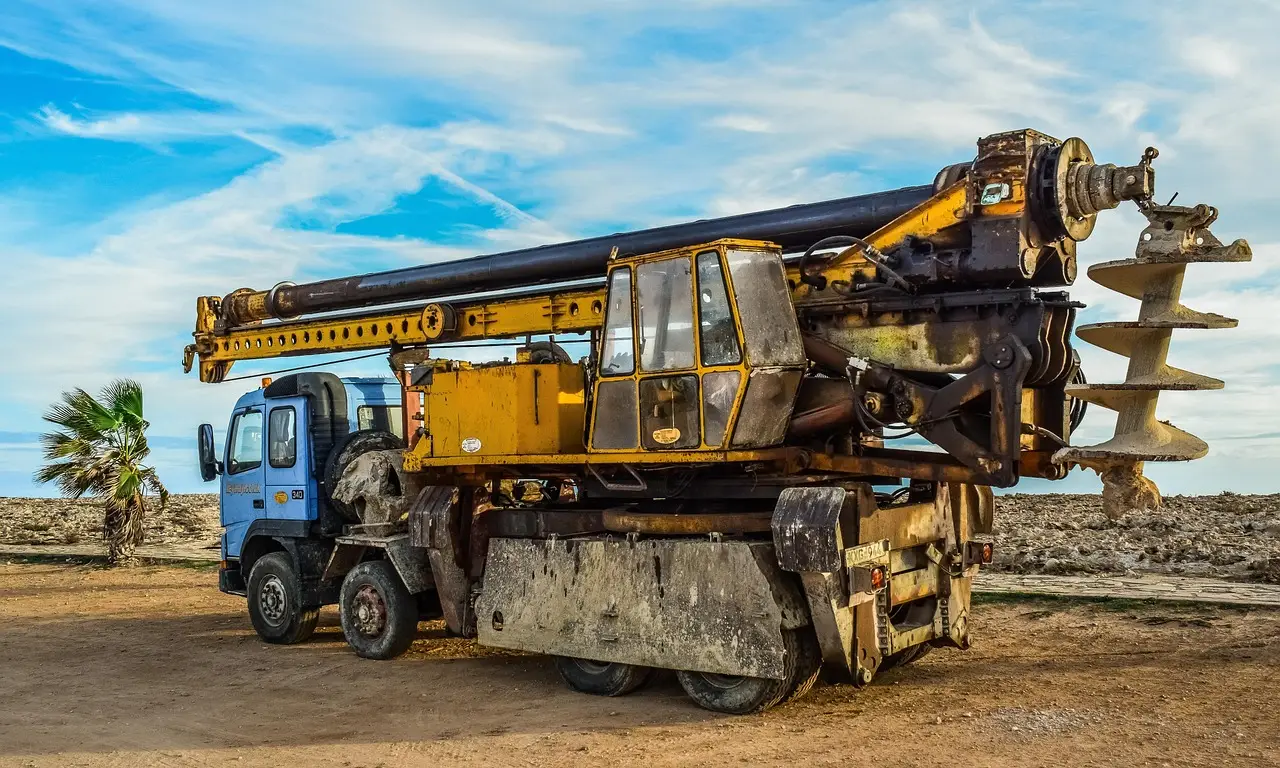
Quaise's method sounds like science fiction, and the company has not yet demonstrated it at commercial depth. Starting around 2.5 miles down, Quaise swaps conventional drill bits for a gyrotron-powered one. The device bombards rock with millimeter-wave radiation and vaporizes it into ash. The theory: metal bits wear out too fast at super-hot temperatures, and radiation drilling avoids that failure mode.
Mazama Energy, backed by Khosla Ventures, takes the opposite view. On Monday it announced Carbon Chill, a system that keeps conventional drill bits cool using supercritical carbon dioxide instead of water-based drilling mud. The CO2 passes through a rocket-nozzle-style valve above the bit; expansion on the far side rapidly cools it. The gas then absorbs heat, carries drill cuttings to the surface, gets filtered, and is reused. Whether either approach survives field conditions at three miles down remains unproven at scale.
Last week, a third player entered. The Department of Energy granted XGS Energy funding to refine materials, well designs and reliability models for super-hot depths. XGS is experimenting; Mazama and Quaise have made super-hot rock their core business.
What do the numbers say about cost?
Drilling accounts for roughly a quarter to a third of a geothermal plant's total cost. Fewer, deeper, hotter wells could cut that share. That arithmetic only works if the drilling technologies actually perform.
The early data points are limited but real. Mazama drilled its second well 80% faster than its first, and its CO2 cooling technology cut drilling time by another 20%, co-founder and CEO Sriram Vasantharajan told TechCrunch. Two wells is a thin dataset. Speed gains at shallow depths may not hold at three miles and extreme temperatures.
Who is funding the race?
Investors have committed substantial capital on the expectation that these techniques will pay off:
- Quaise: more than $270 million from Prelude Ventures, Collaborative Fund and Engine Ventures, with Vinod Khosla as angel investor, per PitchBook.
- Mazama: $171 million from Khosla Ventures, Doerr Capital and Bill Gates.
Google's half-billion-dollar commitment is the strongest commercial signal yet. But no super-hot rock well has delivered sustained commercial power. The $500 million buys 50 megawatts of promised output, not proven output. Until a well runs continuously at depth, the technology remains a well-funded hypothesis with an unusually credible customer list.
via techcrunch.com (Source)
More from Daniel Okafor
Show full bio
Staff writer covering technology and product news in enterprise information technology and the leaders who run at CIO Monitor.
234 articles
The newsroom digest
One email a day with the stories that matter. No noise.
Cross-references
- Google Buys 1 GW of Demand Response So Its Data Centers Can Drink More
- Mississippi Board Upholds Air Permit for SpaceX's 1.2 GW Power Plant
- IEA: AI to drive 70% rise in data center emissions by 2030
- NIS 334m in Bank Guarantees Backs 150 MW Haifa Data Center Bid
- SpaceX’s $74 Billion AI Bet Faces Texas and Arizona Permits