Incident sheet · /infrastructure
- System
- Infrastructure & Cloud
- Filed
- Read
- 5 min · 935 words
- Severity
- Routine
Space Force’s $10 Million EW Shift Meets Mystery Vandenberg Launches
The Space Force awarded three vendors roughly $10 million to prototype cloud-native electromagnetic-warfare command and control, as two closely spaced Vandenberg launches drew scrutiny.
Event log
- A roughly $10 million, three-month competitive SEWOL prototype phase went to Anduril, Booz Allen Hamilton and Peerless.
- The SEWOL work sits within a $60 million prototype program.
- Each Phase I vendor must build an MVP with mission applications and an SDK for hands-on testing before a one-vendor down-select.
- Falcon 9 Booster 1103 flew for the seventh time on November 11 and landed after about 8.5 minutes.
- Space Systems Command manages an approximately $15.6 billion annual space acquisition budget.
The Space Force awarded roughly $10 million to three companies to prototype cloud-native command-and-control software for hundreds of global electromagnetic-warfare systems.
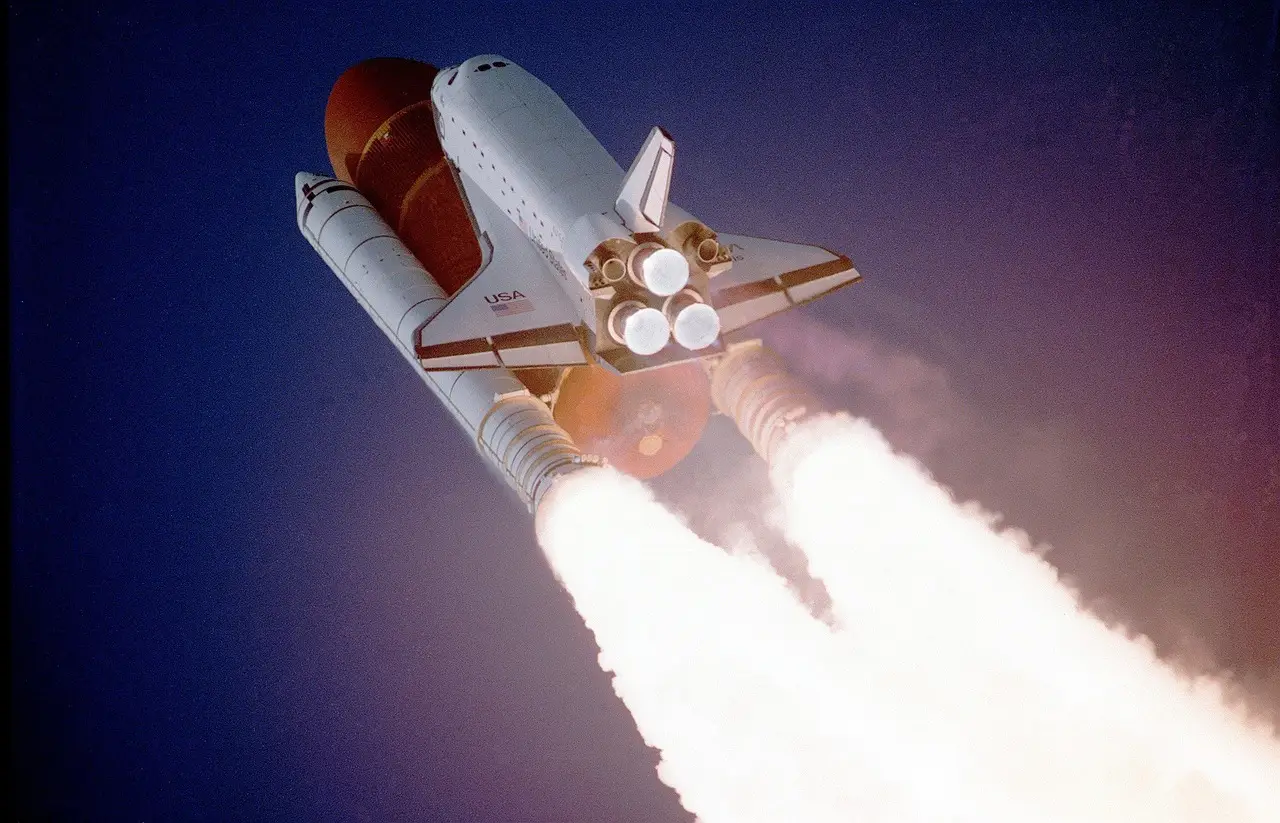
At Vandenberg Space Force Base, California, on November 11, a SpaceX Falcon 9 launched with Booster 1103 from Space Launch Complex 4E (SLC-4E). On its seventh flight, the booster landed 8.5 minutes later on the autonomous Of Course I Still Love You droneship in the Pacific.
Last week, the sixth and newest branch of the U.S. Armed Forces conducted its second mystery California launch. It followed the classified SpaceX USSF-432 mission from the same pad five days earlier, on November 6, 2026.
Industry observers have suggested the back-to-back missions may have carried batches of Starshield satellites for the Space Force’s space-based sensing and targeting network. The payload remains unconfirmed.
Named for the fictional sentient spaceship in Iain M. Banks’s The Player of Games, part of The Culture series, the droneship was built in 2015 from a modified Marmac 304 barge. It first operated near Port Canaveral on the East Coast.
In April 2016, it hosted SpaceX’s first successful at-sea booster landing during the CRS-8 mission. It moved to the Pacific in June 2021 and sits at the Port of Long Beach, California, supporting Falcon 9 polar and sun-synchronous launches from Vandenberg.
Its equipment includes four azimuth thrusters for automated station-keeping, Starlink connectivity and the Octagrabber robot, which secures the booster after touchdown.
The Space Force is modernizing electromagnetic-warfare command and control through the Space Electromagnetic Warfare Operating Location, or SEWOL. Its mission is protecting U.S. and allied interests in, from and to space, preserving freedom of action and deterring aggression.
SEWOL will replace legacy tools with one cloud-native application aligning current space EW applications. It pools data in a common repository, provides a unified operating picture with near-real-time visibility, and supplies end-to-end tactical infrastructure for mission planning, automated or dynamic tasking and monitoring.
- Shift from manpower-heavy, hardware-collocated setups to lean teams managing hundreds of global systems concurrently.
- Orchestrate hundreds of remote EW systems through a common operating picture.
- Drastically reduce crew workload and accelerate decision-making.
Competitive Phase I contracts went to Anduril Industries, Booz Allen Hamilton and Peerless Technologies Corporation. Space Systems Command and Combat Forces Command made the awards through a Space Enterprise Consortium Other Transaction Authority (OTA), part of a $60 million prototype program to modernize U.S. space EW capabilities.
U.S. Space Force Col. Bryon McClain, acting Portfolio Acquisition Executive for Space Combat Power, said: “Our SEWOL program leads the Space Force in acquiring modern, software-defined mission systems. By leveraging Other Transactions and a competitive prototyping phase, we break vendor lock and harness the full power of commercial innovation.”
He added: “Additionally, common interfaces and Modular Open Systems Approach (MOSA) standardization ensure we are building a system that is as agile as the threats it is designed to counter. This is a strategic win for the warfighter and a clear signal that we are serious about acquisition reform.”
The initiative has pivoted to the Software Acquisition Pathway, a modern approach designed to deliver capabilities to the warfighter at the speed of relevance. It moves away from traditional single-vendor contracts toward a competitive “fly-before-you-buy” model.
U.S. Space Force Col. Angelo Fernandez, commander of CFC’s Mission Delta 3 – Space Electromagnetic Warfare, said: “In modern warfare, software is the decisive weapon, and we must be able to change our tactics at the speed of the threat.”
He said the transition puts Guardians “directly in the driver’s seat alongside developers,” ensuring fielded capabilities are not merely “fast to deliver” but “purpose-built to survive and win in a highly contested electromagnetic spectrum.”
As the acquisition field command, Space Systems Command acquires, develops and delivers resilient capabilities to outpace threats and protect the U.S. advantage in, from and to space. It works with joint forces, industry, government agencies, academia and allies, buying and building satellite constellations and warfighting capabilities.
It manages an approximately $15.6 billion annual space acquisition budget for the Department of War and controls launch ranges at Vandenberg and Patrick Space Force Base, Florida, handling military and commercial rocket launches.
Combat Forces Command, the Space Force’s Service Force Provider, generates, presents and sustains combat-ready intelligence, cyber, space and support forces. Evolved from historic Air Force Space Command, it is headquartered at Peterson Space Force Base, Colorado, with roughly 12,000 personnel across Deltas, squadrons and units of action.
During the three-month Phase I, each vendor will build a Minimum Viable Product: a functional prototype of the core SEWOL framework, including mission applications and a Software Development Kit. Government technical experts and operational users will test each one hands-on.
What does this change for Space Force operators?
For operators, the change is a common operating picture and faster tasking across remote EW systems, managed by smaller teams rather than hardware-collocated crews. A three-month proof precedes selection of one builder.
Maj. Dennis’ ‘Nomad’ Sieber, SEWOL program manager, said: “This is not a paper-based competition; we are paying these vendors to build working software so we can see what their teams are truly capable of.”
Sieber said the formal down-select would pick one vendor to build the first operational version, proving the architecture and identifying the right long-term partner “before we bend metal, or in our case, write production code.”
Next comes a working architecture and one production partner.
via news.clearancejobs.com (Source)
More from Olivia Hart
Show full bio
News editor covering money, funding and market shifts around enterprise information technology and the leaders who run at CIO Monitor.
207 articles
The newsroom digest
One email a day with the stories that matter. No noise.
Cross-references
- Space Force Pays Viasat $450M to Run Its Multi-Vendor Space Data Network
- Cyberattack via Malicious Update Hit German Defense Drone Maker Quantum Systems
- Air Force Turns Tanker Comms Experiment Into $180M Program of Record
- SpaceX’s $74 Billion AI Bet Faces Texas and Arizona Permits
- Tesla Registers 200 Cybercabs in One Day, Fleet Reaches 773