Incident sheet · /applications
- System
- Enterprise Applications
- Filed
- Read
- 4 min · 866 words
- Severity
- Routine
Zendesk drops per-seat licenses in outcome-budget pricing test
Zendesk tests outcome-budget plans with unlimited seats, opens Bridge to Claude, ChatGPT and Copilot, and promises healthcare and finance agents in 2027; 5,000 of 80,000 customers bill on outcomes.
Event log
- 5,000 of Zendesk's 80,000 customers use outcomes-based billing — about one in four of the 20,000 using AI in any form
- New early-access plans drop per-seat licenses for a flexible 'outcome budget', with unlimited user seats and tier-dependent feature and platform fees
- Zendesk Bridge, in early access, connects approved Zendesk workflows and actions to Claude, ChatGPT and Microsoft Copilot, with admin-controlled permissions
- Industry-specific agents for healthcare and financial services verticals are planned for 2027
- Zendesk president Shashi Upadhyay says work definitions such as automating a customer return are agreed with customers '95% of the time'
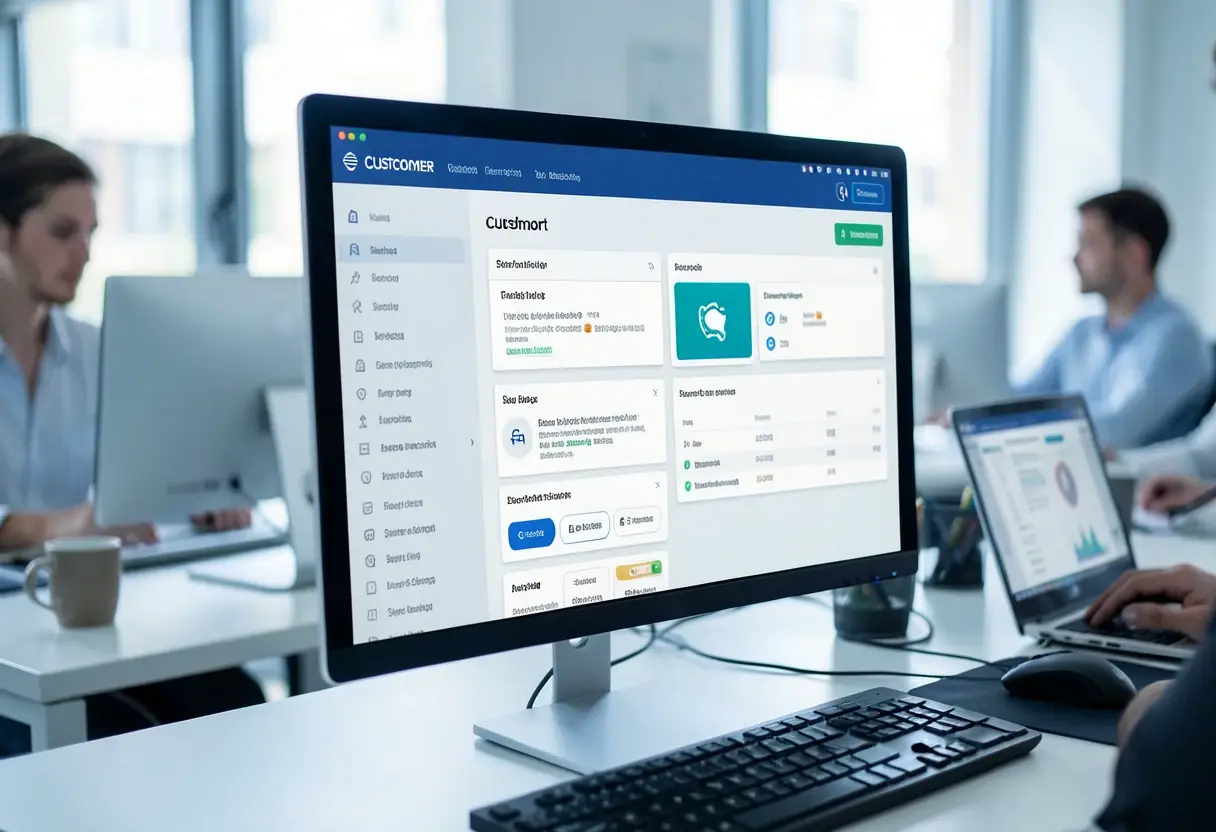
Five thousand of Zendesk's 80,000 customers already buy service on outcomes rather than agent seats — one in four of the 20,000 that use AI in some form, and roughly one in sixteen of the whole base. Last week the vendor said it would widen that group, swapping per-seat licenses for a flexible "outcome budget" covering eligible customer issues resolved and business work completed.
Zendesk paired the pricing change with platform capability: tools for AI assistants to run support workflows, a directory that helps those assistants find verified support channels, and industry agents promised for 2027. Shashi Upadhyay, Zendesk's president of products, engineering and AI, expects more customers to move to outcomes billing, and analysts at Actionary argue the distinction Zendesk is drawing matters more than the billing mechanics itself.
What changes when seats stop being the unit of charge?
The replacement plans run through an early-access program and include unlimited user seats plus access to Zendesk AI capabilities, with feature and platform fees varying by tier. In exchange, billing attaches to a stated budget of completed work rather than the number of agents logged in.
The mechanics depend on one separation. Zendesk treats a "resolution" as a technical state that can be good or bad and may still require follow-up; the billable "outcome" is what the customer actually wanted. Events the company says it does not count as resolutions include:
- Tickets created as verified test or training data
- A customer who hangs up on hold
- Calls routed as overflow to an external call center or an external voice AI agent
Zendesk also lists situations that attract no additional voice charge.
Plainly: buyers would pay for finished work, not for the number of agents on the roster.
What can AI assistants now reach?
Zendesk Bridge, in early access, lets AI assistants and agents call approved Zendesk service workflows and actions through tools such as Claude, ChatGPT and Microsoft Copilot, while administrators control permissions and monitor activity. That gives a personal assistant a sanctioned path into a company's support operation rather than a free-wheeling one.
Two further pieces sit on the roadmap. The Open Service Directory is meant to help personal AI assistants find businesses' verified customer support channels. And in 2027 Zendesk plans to roll out industry-specific agents beyond commerce, adding healthcare and financial services verticals.
Plainly: assistants get a controlled doorway into a company's support stack, and 2027 brings vertical-specific agents.
Why AI makes the billing argument harder
Contact centers already measure success with settled metrics such as time-to-answer and first-call resolution. AI adds a definitional problem: vendor and customer must agree exactly what counts as a "resolution" of a ticket or case, because that is the point where AI billing happens.
Upadhyay said most Zendesk customers already hold the data needed to decide how and when service issues are solved. Today, though, some user AI training data comes from humans telling the system an issue was resolved. If AI eventually resolves 60% to 80% of service cases, he said, "what constitutes an outcome" becomes clearer and more precise. Work definitions, such as what counts as automating a customer return, are already agreed between Zendesk and a customer "95% of the time."
He put it this way: "We are finding that — especially in the support domain — the unit of work is very well defined. The unit of work is: 'Somebody has a problem, and you solve that problem,'" Upadhyay said. "It lends itself really well to outcome-based pricing. Once people understand that they can define what the unit of work, success and failure means — and I pay the vendor for success — it's a much easier conversation, and that's why I think they've been [adopting the model]."
Plainly: nobody can bill for an outcome until both sides agree on what an outcome is.
What do the analysts make of it?
Jim Davies, analyst at Actionary, said: "There's quite a big difference between a resolved interaction and a positive outcome from that interaction. Being able to tease that out as two different things and focus on the latter — because what you want is that positive outcome — has got to be a good thing."
Simon Harrison, his colleague, warned that most customer service vendors are adding similar AI tools, and many are building platforms that become "the perfect vehicle to take no responsibility, whatever" for customer needs. Against that, Zendesk's business-to-business pedigree helps users stay in step with their own customers as they build AI-driven experiences.
Harrison's blunt assessment: "Just because something has been resolved — or addressed — doesn't mean the customer's happy. It doesn't mean they've actually got what they wanted. It typically means the business has got what they wanted. Zendesk tends to be a little bit more in tune with what it is that really matters to people."
Plainly: analysts read the split between resolution and outcome as the part that matters.
Takeaway: Zendesk wants buyers to pay for finished customer work instead of software seats, and to trust the vendor to define when that work actually succeeded.
via techtarget.com (Source)
More from Amara Osei
Show full bio
Correspondent covering regulation, policy and their impact on enterprise information technology and the leaders who run at CIO Monitor.
188 articles
The newsroom digest
One email a day with the stories that matter. No noise.