Incident sheet · /transformation
- System
- Digital Transformation
- Filed
- Read
- 4 min · 817 words
- Severity
- Routine
VA.gov Redesign Draws on 90,000 Veteran Surveys; LLM-Friendly Updates Next
VA.gov's new homepage, built from roughly 90,000 veteran survey responses, adds single sign-on, magic links and natural language search — with LLM-friendly updates due around January, says OIT's Zack Schwartz.
Event log
- The VA.gov homepage redesign drew on nearly 90,000 veteran survey responses and veteran testing, per a Veterans Day press release.
- Zack Schwartz said more releases are coming around January, aimed at making VA.gov friendlier to large language models.
- A CLEAR identity verification partnership announced last month has brought thousands of first-time VA.gov account signups, many via in-person kiosks.
- The VA has wrapped VA.gov in commercial-banking-grade security with top global cybersecurity firms; AI costs remain unknown.
- Schwartz plans to meet incoming Federal CIO Carter Farmer to position the VA as an example for other agencies in the AI space.
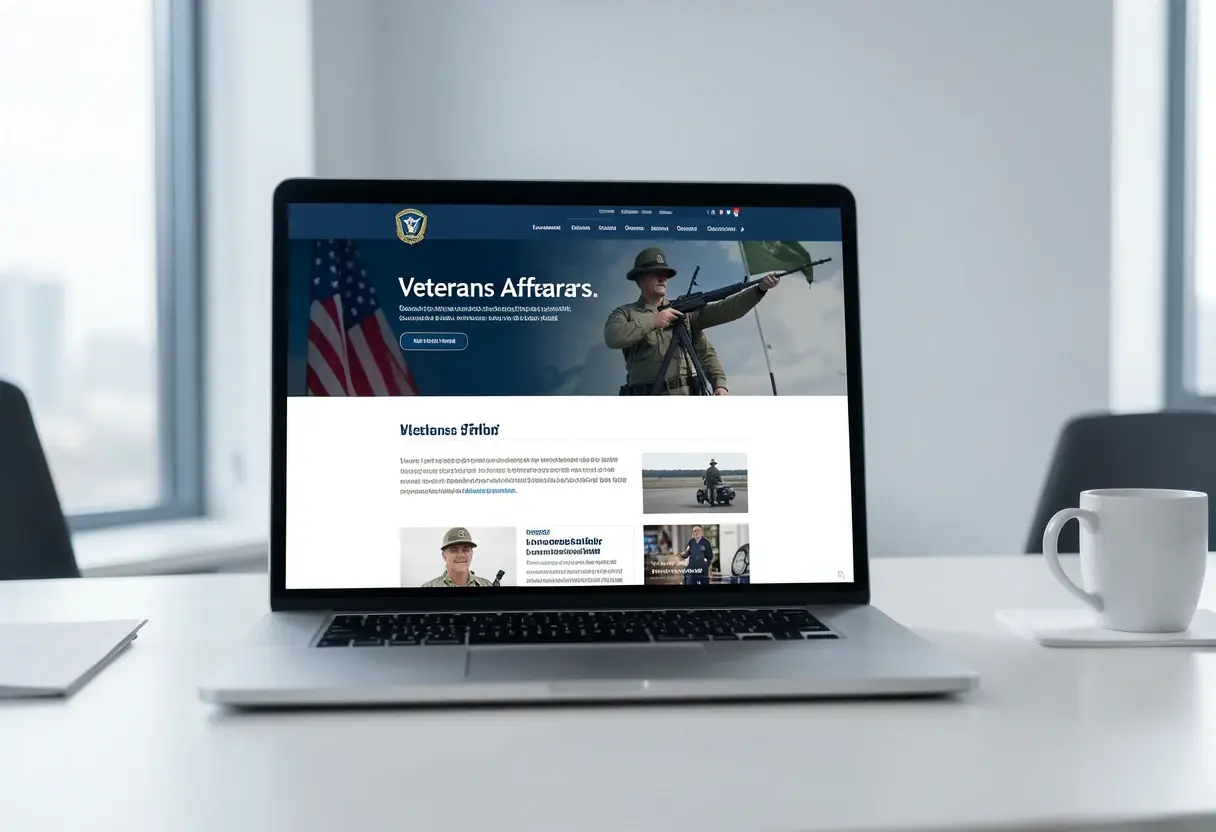
Nearly 90,000 veteran survey responses shaped the Department of Veterans Affairs' homepage redesign that went live last week, and Zack Schwartz, principal deputy assistant secretary in the agency's Office of Information and Technology, says the next round of changes — due around January — will make VA.gov easier for large language models to use.
The redesigned site, announced in a Veterans Day press release, introduces single sign-on, magic links, natural language search and pre-filled forms. Schwartz laid out the roadmap at GovCIO Media & Research's VA Modernization Forum on Friday and in remarks to FedScoop.
What changed on VA.gov, and why now?
Schwartz said tens of thousands of veteran surveys and direct veteran testing drove the simplification. His office has also been building relationships — with congressional partners and with individual veterans — rather than simply shipping features.
"We're focused on real changes that are going to continue to happen," Schwartz said. "We have the logs to show [super intelligence] is very much being used by veterans to interact with VA, and our systems have some work to do to be more responsive to what we need."
He was blunt about the method: "That is how we get to be successful — it's not just deploying the technology … it is actually the relationships, and that is the hardest part. You actually have to go out and hear criticism."
Since taking his current role earlier this year, Schwartz has framed the mandate in plain terms: the time for "science experiments" is over, and the expectation is incremental delivery that keeps pace with technology.
In short: the redesign is survey-driven simplification, delivered in small releases rather than big-bang projects.
How is the VA preparing its site for AI?
The January releases are the visible part of a deeper effort. Schwartz's team is studying how large language models crawl and navigate VA.gov today, then building site "skills" based on those observations — a deliberate accommodation of veterans, especially younger ones, who arrive through AI assistants rather than a browser and a search box.
"We're learning right now about how LLMs navigate our site today, and we're taking those lessons and seeing how they're maneuvering and then being able to build skills based off of that," he said.
He is "very focused" on the LLM component and aims to ship more LLM-related website updates next year, all to meet the veteran "where they are."
The takeaway: VA.gov is being re-engineered not just for humans but for the AI intermediaries many veterans now use first.
What about identity, security and cost?
Two supporting efforts run alongside the redesign:
- Identity onboarding. A partnership with the identity verification service CLEAR, announced last month, has already brought in thousands of veterans who never had VA.gov accounts — many signing up through CLEAR's in-person kiosks, Schwartz told FedScoop.
- Security. The VA has worked with "top companies who provide cybersecurity for websites across the world" to wrap VA.gov in protections comparable to commercial banking's — an approach Schwartz called a "game changer."
"We're really excited about the security side," he said. "Too much of our security today is still relying on tools and technologies that don't leverage enough SI, and so continually focusing on how we are bringing in SI to drive security efforts and manage it, and most importantly, patch and maintain the safety and security is huge."
The agency is also working with the America-dot-gov integration effort, though Schwartz acknowledged the financial costs of AI "are still unknown." — no budget figures have been attached to the modernization yet.
Will this survive a change of administration?
Schwartz said he will meet with incoming Federal Chief Information Officer Carter Farmer so Farmer can "understand how VA is pushing out so much in the SI space, and wants us to continue to be a representative example for many other agencies" — "SI" being the Trump administration's self-styled terminology for AI.
Part of the progress, he said, is internal: low-cost tools that improve staff working conditions so employees can concentrate on veteran-facing work. "There's so much opportunity to move forward at a low cost that can make the lives of our staff better, so that they can again focus on veteran-facing critical activities," he said.
His case for durability rests on delivery rather than politics. "The pace of technology doesn't care who's in the White House and doesn't care who has control of Congress," Schwartz said. "It's going to be focused on making sure that the technology we have is delivering for the veteran, and I believe that's why it will honestly last from administration to administration."
"This is an incremental process, but more importantly, it's time that the OIT actually steps up and makes changes," he told FedScoop.
via fedscoop.com (Source)
More from Amara Osei
Show full bio
Correspondent covering regulation, policy and their impact on enterprise information technology and the leaders who run at CIO Monitor.
188 articles
The newsroom digest
One email a day with the stories that matter. No noise.
Cross-references
- Oracle and VA face Senate grilling as EHR contract ceiling hits $27B
- Oracle Execs Face Congress Over $17B VA Health Record Hike
- Pentagon Bets Its 2028 Clean Audit on an $821M Data Platform
- DOJ CIO Wants to 'Tear Down' Legacy Systems, Not Patch Them
- Pentagon CIO Nominee Kirsten Davies Pitches 'Great Change' for DoD IT